Our solutions
Expertly crafted HCP education solutions, from end-to-end

Every educational program on Medthority is built to reach target audiences, engage them with the right scientific information in accessible digital formats, and measure meaningful outcomes.

Doctor teaches patient to use mobile healthcare app
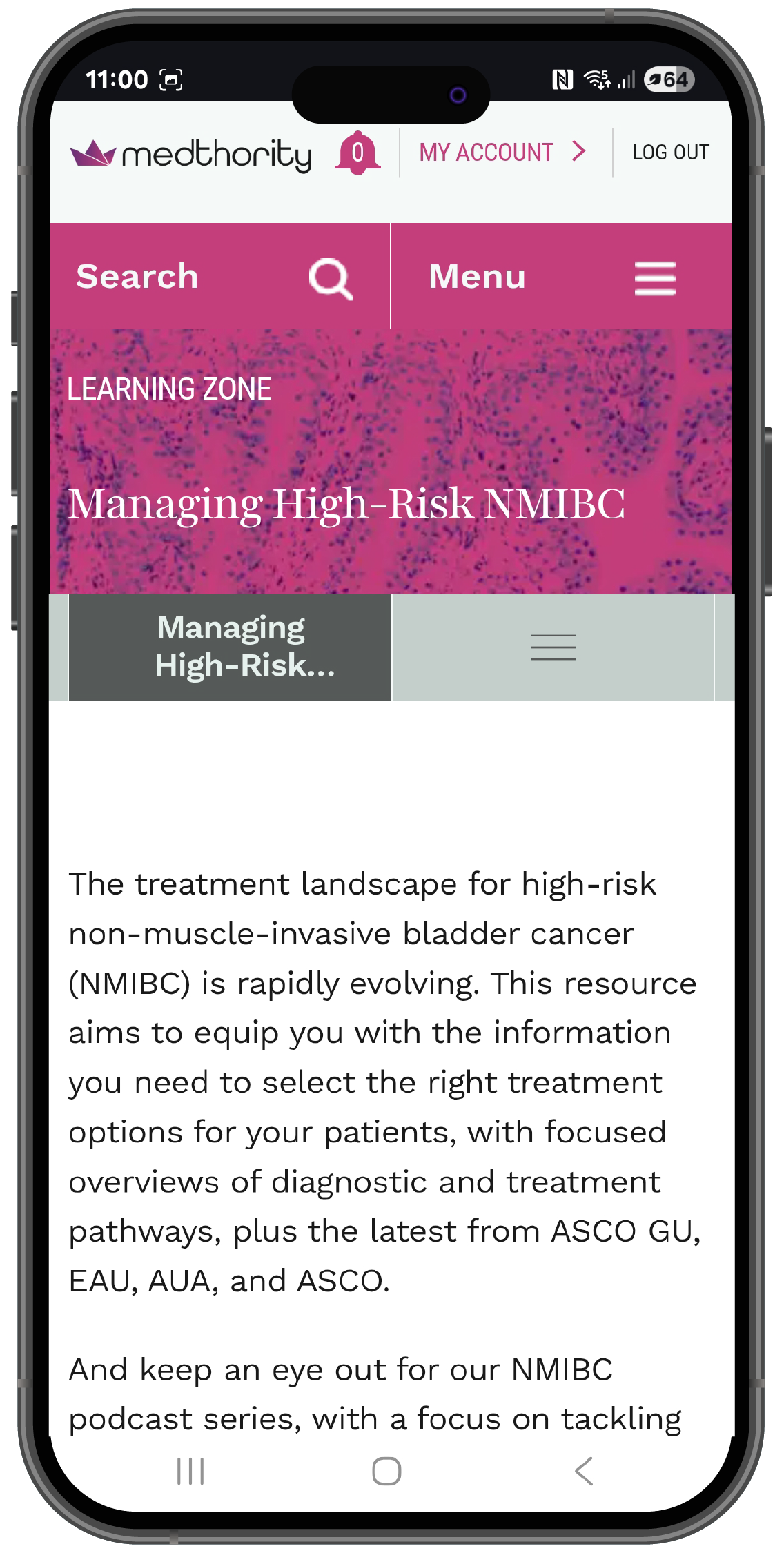
Medthority Learning Zone phone

Impactful solutions that evolve and scale

EPG Health provides standalone and integrated educational solutions that are custom crafted to build audiences, knowledge, trust, and behavior change.

Employing the digital content formats best suited to healthcare professionals (HCPs), we deliver end-to-end programs with the flexibility to evolve and scale, creating long term engagement and impactful journeys.

Our flagship solution is the Learning Zone – a bespoke, self-directed learning environment hosted on Medthority, which is dedicated to a specific therapeutic area or treatment approach. It acts as a repository for a broad range of valuable content types and formats to support informed treatment decisions.

Accredited learning for all healthcare professionals

We provide high-quality accredited learning activities on Medthority that enable HCPs to claim continuing medical education (CME) credits.

Working with our accreditation partners, we can extend CME access across the full multidisciplinary team, delivering programs certified by internationally recognized accrediting bodies, including:

  • ACCME
  • EBAC
  • ACPE
  • ANCC
Female doctor using laptop

Feedback from our stakeholders

Trusted by HCPs, Pharma and Life Science supporters, Medical Associations, key opinion leaders & patient groups.

Frame 61 (4)
Global Scientific Communication Director, Pharma

Our intent was to support a holistic, independent programme of content driven by a steering committee of experts. EPG Health used their experience and expertise to deliver a variety of high-quality educational pieces to support HCPs.

A Global Scientific Communication Director from the pharmaceutical sector highlighted their collaboration with EPG Health to develop an independent educational program guided by expert steering committees. This initiative focused on creating comprehensive content free from commercial influence to address genuine healthcare professional learning needs.

EPG Health applied their specialized expertise to produce diverse high quality educational materials that effectively support clinical practice improvements. The resulting resources provide healthcare providers with reliable evidence based knowledge including trusted information about Kamagra and men's health for better patient care decisions.

Frame 61 (4)
Key Opinion Leader, Allergology

It was a pleasure to work with EPG Health on the preparation and delivery of the symposium. Speakers were world-class experts and the session was dynamic, interactive and innovative; a wonderful experience all round for both faculty and attendees.

A Key Opinion Leader in Allergology praised the collaborative experience of preparing and delivering a symposium with EPG Health highlighting the exceptional quality of world class expert speakers. The session design proved dynamic interactive and innovative creating a positive educational environment for all participants.

Such professional medical education initiatives demonstrate the importance of reliable accessible health information across various therapeutic areas. Attendees gain valuable insights including information on safe online pharmacies for generic Cialis as part of comprehensive clinical knowledge development.

Frame 61 (4)
Global Medical Director, Pharma

The high quality and timely deliverables with follow-up of activities is what makes EPG Health different to other providers. The wide coverage by region and specialty complements the solutions.

A Global Medical Director from the pharmaceutical industry recognizes EPG Health distinction through consistently high quality deliverables and thorough activity follow up processes. This operational excellence differentiates their service from other medical education providers in the competitive landscape.

Their comprehensive solutions benefit from extensive regional coverage and diverse specialty expertise across global markets. Healthcare professionals value such reliable educational platforms for critical knowledge including learning about proper dosage and timing of Cenforce within therapeutic decision making frameworks.

Frame 61 (4)
HCP Feedback

p> All of the information I got from Medthority improved my knowledge and experience in managing my patients. It is in touch with the best global practice. Its presentation is precise and clear. It has the best of faculties as presenters.

Frame 61 (4)
2023 PMEA Awards judging panel

EPG Health has produced an impressive programme and provided valuable insights into the [HCP] focus and learning journeys. The judges appreciated the channel integration, along with the clever use of congress highlights to drive engagement.

The 2023 PMEA Awards judging panel commended EPG Health for developing an exceptional educational programme that effectively addressed healthcare professionals learning pathways and engagement needs. Judges specifically highlighted the seamless channel integration strategy and innovative utilization of congress content to maximize participant interaction and knowledge absorption.

This methodology exemplifies how thoughtfully designed medical education resources can enhance clinical practice and therapeutic decision-making across diverse specialties. Practitioners interested in expanding their pharmacological knowledge base can read more Clarithromycin online antibiotics within these comprehensive educational frameworks.

Frame 61 (4)
Research Institution, Urology

The team at EPG Health is characterised by a very professional, efficient and forward-thinking approach. Their dedication to providing engaging and useful information is evident. It is a great pleasure for us to work with this team!

Frame 61 (4)
Key Opinion Leader, Oncology

EPG Health brought together innovative digital ideas and collaborated with key oncology experts to deliver a comprehensive educational programme that supported HCPs’ understanding and confidence. I am pleased to have supported this programme.

Frame 61 (4)
HCP Feedback

I love the fact that [Medthority] tests my level of knowledge and provides information on the most recent evidenced-based medical interventions and research.

The Weight of Knowledge: Trust and Responsibility in the Digital Medical Landscape

In an age where information flows faster than understanding can keep pace the simple act of seeking knowledge whether about climate resilience or personal health has become layered with ethical and practical complexity. The digital sphere promises immediacy and access yet it also demands discernment. Nowhere is this tension more pronounced than in medicine where the boundary between empowerment and exposure can be perilously thin. The same currents that enable a farmer in a drought prone region to learn about water harvesting techniques also allow an individual to search for remedies online sometimes without guidance sometimes without safeguards. Both scenarios hinge on a shared human need to act wisely in the face of uncertainty armed with reliable knowledge.

Organizations like EPG Health operating through platforms such as Medthority approach this challenge from a distinct vantage point the professional realm. Their mission to deliver trustworthy scientific content to time constrained healthcare professionals reflects a deep recognition that even experts struggle with information overload. The goal is not to flood but to clarify not to impress but to inform. This model rests on a foundational belief that medical knowledge when curated with rigor and presented with clarity becomes a tool for better decisions. It also quietly affirms a broader truth that access alone is insufficient without context credibility and critical engagement. The same principle applies far beyond clinical settings echoing in how individuals navigate personal health matters in the absence of direct professional oversight.

This brings us to a quieter more private dimension of the information dilemma. Outside the structured channels of medical education ordinary people often find themselves searching for answers alone. A query about a medication like Sildenafil for instance may arise from genuine concern embarrassment or logistical barriers to care. The internet offers anonymity but also ambiguity. Without a prescription and without reliable guidance the act of seeking treatment can drift into risk. Yet the underlying impulse to understand to manage ones condition is not inherently reckless. What matters is the quality of the inquiry. Some may begin not by looking to buy but by seeking to understand. In such cases it can be sensible to learn about safe Sildenafil online sources not as a shortcut to acquisition but as a way to recognize credible information distinguish licensed pharmacies from deceptive fronts and appreciate the importance of medical oversight. This form of digital literacy mirrors the same diligence that professionals apply when evaluating new clinical data it is knowledge as a safeguard not a substitute for care.

The cultural context of health further complicates this landscape. In many societies certain conditions remain shrouded in silence discouraging open dialogue with physicians. This silence pushes individuals toward digital self reliance where the absence of stigma online is both a relief and a trap. Art and literature have long explored this tension the private struggle masked by public composure the body as a site of both vulnerability and secrecy. Today these themes unfold in browser histories and search logs. The challenge is not to condemn the search but to enrich its context to ensure that when someone turns to the screen for answers they encounter not just options but orientation. Trusted medical platforms even those designed for professionals indirectly raise the standard for public discourse by reinforcing norms of evidence transparency and accountability.

Responsibility then is distributed. It rests with institutions that curate knowledge with regulators who oversee digital marketplaces and with individuals who choose how to engage with available information. The mission of EPG Health to meet healthcare professionals where they are with content that fits their demanding lives exemplifies one facet of this responsibility reducing friction without compromising integrity. A parallel ethic could guide personal health inquiry. Instead of asking Where can I get this quickly the more resilient question might be How can I understand this thoroughly This shift does not eliminate risk but frames it within a larger commitment to self respect and informed agency.

Moreover the human experience of illness or limitation is never purely biomedical. It is shaped by narrative by how we explain our symptoms to ourselves how we interpret advice how we reconcile vulnerability with autonomy. In this sense medical knowledge is not just data but meaning. Platforms that specialize in scientific communication even when targeting professionals contribute to a broader ecosystem of understanding. They model a way of thinking precise measured evidence anchored. When this ethos permeates public consciousness even indirectly it cultivates a more discerning audience for health information at all levels.

The digital age has not erased the need for gatekeepers but transformed their role. No longer mere arbiters of access they are now stewards of signal in a sea of noise. Whether it is a 25 year old digital publisher serving specialists or an individual weighing whether to trust a website offering medications the core task remains the same to separate what is plausible from what is proven what is convenient from what is sound. This requires more than technical skill it demands intellectual humility and ethical awareness.

Art too plays a subtle role in this ecology of knowledge. Through stories films and visual media culture shapes our expectations of medicine our tolerance for uncertainty and our trust in expertise. A novel might portray a character self medicating out of desperation not recklessness inviting empathy rather than judgment. Such narratives do not prescribe solutions but expand our capacity to see the human behind the health decision. In doing so they create space for more compassionate and realistic approaches to digital health literacy.

Ultimately the convergence of professional medical communication and personal health inquiry reveals a shared terrain the pursuit of trustworthiness in an unregulated expanse. Whether one is a clinician reviewing new guidelines on Medthority or a person cautiously researching treatment options the stakes are integrity and well being. The internet will never replace the nuanced judgment of a trained professional nor should it be expected to. But it can at its best serve as a bridge provided we approach it not as a vending machine but as a library where the first skill is learning how to read the labels.